
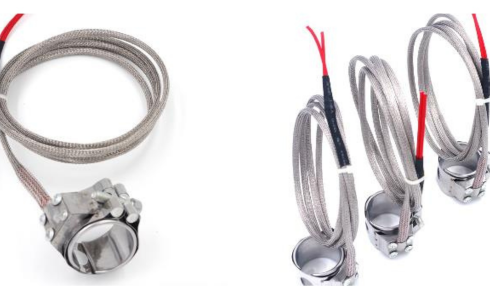
Factors Engineers Consider When Selecting a Mica Nozzle Heater
Production efficiency often depends on how precisely heat is applied at critical points in a process. Small deviations in temperature or heater performance can lead to material defects, downtime, or uneven output. That is why engineers evaluate a wide set of technical factors before settling on a mica nozzle heater for demanding industrial applications.
Required Watt Density Based on Nozzle Size and Heat Needs
Watt density determines how much heat is delivered over a given surface area, making it one of the first calculations engineers perform. A nozzle with a small diameter but high heat demand requires careful balance to avoid overheating while still reaching operating temperature quickly. If watt density is too low, heat transfer becomes sluggish and inconsistent.
Higher watt density can improve response time, but it also increases stress on the heater element. Engineers consider material flow rates, thermal conductivity of the nozzle, and cycle times to determine the optimal watt density for a mica nozzle heater. The goal is steady, uniform heat without creating hot spots that shorten service life.
Maximum Operating Temperature of the Heater Material
Every heater design has a temperature ceiling tied to its materials. Engineers must ensure the mica nozzle heater can operate safely above the required process temperature without degrading insulation or internal components. Running close to the maximum rating leaves little margin for error.
Material selection plays a major role here. Mica insulation performs well at elevated temperatures, but surrounding components such as terminals and sheathing also matter. Engineers evaluate both continuous and peak temperature exposure to avoid premature failure during high-demand production cycles.
Physical Dimensions to Ensure a Proper Nozzle Fit
A precise fit ensures efficient heat transfer from the heater to the nozzle surface. Gaps, uneven contact, or incorrect inner diameter reduce performance and can cause localized overheating. Engineers verify inner diameter, width, thickness, and clamping style before finalizing a mica nozzle heater.
Manufacturing tolerances are also considered. Even small variations in nozzle geometry can affect heater performance. Engineers often account for expansion during heating to maintain consistent contact as temperatures rise and fall throughout the process.
Voltage and Power Specifications Matching System Design
Electrical compatibility is non-negotiable. The heater’s voltage and power ratings must align with the system’s electrical supply and control architecture. Mismatched specifications can lead to inefficient operation or immediate failure. Engineers also consider how power is distributed across multiple heaters in a system. A mica nozzle heater must integrate smoothly without overloading circuits or requiring excessive modification. Stable power delivery ensures predictable heating behavior and simplifies long-term maintenance.
Environmental Exposure to Moisture or Corrosive Conditions
Operating environments influence heater longevity. Moisture, chemical vapors, or corrosive byproducts can penetrate poorly protected components and degrade insulation. Engineers evaluate ambient conditions before specifying protective features. For harsher environments, additional sealing or protective sheathing may be required. A mica nozzle heater selected for a clean indoor setting may not perform the same in humid or chemically active areas. Environmental assessment helps prevent unexpected downtime caused by external factors.
Insulation Requirements to Maintain Safe Surface Heat Levels
Surface temperature affects both safety and efficiency. Proper insulation ensures heat is directed toward the nozzle rather than dissipated outward. Engineers consider insulation thickness and material composition to control external surface temperatures. Excessive surface heat can pose safety risks and waste energy. By specifying the right insulation characteristics, engineers help maintain consistent heating while reducing energy loss. This balance improves both operator safety and system performance.
Heater Durability Under Frequent Heat Cycling Demands
Many industrial processes involve constant heating and cooling cycles. These cycles cause expansion and contraction that stress internal components. Engineers evaluate how well a mica nozzle heater tolerates repeated thermal cycling without cracking or delaminating.
Durability assessments include startup frequency, shutdown intervals, and temperature ramp rates. A heater that performs well under steady conditions may fail quickly under aggressive cycling. Selecting a design built for repeated transitions reduces replacement frequency and maintenance costs.
Compatibility with Process Controls and Temperature Sensors
Modern systems rely on precise control. A mica nozzle heater must work seamlessly with thermocouples, RTDs, and control units to maintain accurate temperature regulation. Engineers verify sensor placement options and response characteristics during selection.
Control compatibility also affects process consistency. Heaters that respond predictably to control signals allow tighter tolerances and improved product quality. Engineers prioritize designs that integrate smoothly with existing control infrastructure rather than requiring complex workarounds. Selecting the right heater involves more than matching dimensions or wattage. It requires understanding how materials, environment, electrical systems, and process demands interact over time. Thermal Corporation offers a broad range of industrial heating products built for accuracy, durability, and consistent performance across demanding applications.